Wondering what time of day to give your dog probiotics? In this vet-reviewed article we look at when to give daily probiotics for dogs.

- Home/
- Dog/
- Health & Wellness/
- What Time of Day Should I Give My Dog Probiotics?
What Time of Day Should I Give My Dog Probiotics?
Published by
Apr 08, 2026
Updated Aug 26, 2026
12 min read·Updated: Aug 26, 2026

Reviewed by

Vet-reviewed by Dr Legend Thurman, DVM, MSL, CVBP, MRCVS
The best time to give your dog probiotics is the time you can give them regularly as part of a daily routine. For most dogs, probiotics can be given in the morning, evening, or any time of the day – what matters most is maintaining a consistent schedule that fits your lifestyle.
Some products are designed to be given with food, so it’s always important to follow the instructions on your chosen supplement. If you’re unsure, your veterinarian can help guide you.
PetLabCo.®’s probiotics for dogs are designed to fit conveniently into your daily routine. They should be given consistently at a time that suits you and your dog. Certain PetLabCo.® products, like the popular PetLabCo.® ProBright® Advanced teeth cleaning powder, work best at mealtimes – it’s important to check usage instructions on the product label when giving your dog any form of daily supplement.

“For most dogs, probiotics can be given at any time of day. What matters most is establishing a regular routine that supports digestive balance over time.” – Dr. Legend Thurman, DVM, MSL, CVBP, MRCVS
Key Takeaways: What Time of Day To Give Dogs Probiotics
- There is no single “best” time of day to give dog probiotics
- Regular daily probiotic use is more important than the exact timing
- Many pet owners give dog probiotics during mealtime for convenience
- Dog probiotics are a supportive tool and not a replacement for veterinary care
- Results can vary depending on factors such as diet, breed, age and activity level
- Always consult your veterinarian for personalised guidance

When Is the Best Time to Give My Dog Probiotics?
There isn’t a fixed best time for giving dog probiotics. Most dogs can take them at any point during the day, as long as they are given regularly.
In practice, the best time is simply the one that fits naturally into your daily routine. This might be alongside breakfast, dinner, or another consistent daily activity.
Does Timing Matter When Giving Your Dog Probiotics?
Timing is usually less important than consistency.
For most dogs, giving probiotics at the same time each day matters more than choosing a specific hour. Regular use of dog probiotic chews or a multifunctional dog probiotic powder helps provide your dog with a consistent level of proactive gut health support. By giving your dog their probiotics at the same time every day, you’re encouraging consistent daily habits as part of an overall wellness routine.
While some theories suggest that morning use of dog probiotics when the stomach environment is less acidic – before breakfast – may be beneficial, strong evidence showing a clear advantage for one time of day over another in dogs is limited.
If your dog is on medication or has ongoing digestive concerns, it’s always best to check timing with your veterinarian.
Should I Give My Dog Probiotics With Food?
It’s important to give your dog their daily probiotic chew or powder according to the usage instructions. Some products are designed to be given during mealtime, while others can be given more flexibly throughout the day.
If your dog probiotic is suitable for mealtime use, you can sprinkle it into your pup’s bowl, which may help with acceptance, particularly on first introduction.
Probiotic Soft Chews, like PetLabCo.® Probiotic Chew, can be given on their own at any time of day and are generally well tolerated thanks to the savory flavor and soft texture.
Morning or Evening – Which Is Better?
Morning or evening both work – the best time is the one you can stick to every day.
There is no clear evidence that probiotics are more beneficial at a specific time of day. The most important factor is choosing a routine that you can maintain consistently.

Choosing What Time of Day To Give Your Dog Probiotics
You might choose mornings if:
- You want to give probiotics during breakfast time
- Your mornings follow a predictable routine
You might choose evenings if:
- Your evenings are more predictable
- You prefer to give supplements during dinner time
Either approach is fine – daily use is what matters most.
“There isn’t a single ‘best’ time to give dog probiotics – the right timing is the one that fits your dog’s daily routine. In some cases, such as when medications are involved, your veterinarian may recommend more specific timing.” – Dr. Thurman Legend, DVM, MSL, CVBP, MRCVS
Should Dog Probiotics Be Given Away From Antibiotics?
Yes, dog probiotics are often given a few hours apart from antibiotics.
Dog probiotics are often given a few hours apart from antibiotics.
Spacing dog probiotics from antibiotics is commonly recommended, although specific guidance may vary depending on the medication and your veterinarian’s recommendations.
A practical example schedule might look like this:
| Time | What to Give |
| 8 a.m. (breakfast) | Antibiotic |
| 12 p.m. or 6 p.m. | Probiotic supplement |
Always follow your veterinarian’s advice when combining supplements and medications.
What Happens if My Dog Misses a Day of Probiotic Use?
Missing an occasional serving of dog probiotics is unlikely to have a significant impact.
If you miss a day, simply continue as normal the next day – there’s no need to double up.
If multiple servings are missed and you notice changes, your veterinarian can help guide next steps.
How to Build a Routine for Giving Dog Probiotics
A simple, repeatable routine is key for pet owners.
To make probiotics part of your daily plan:
- Pick one time each day that fits your household schedule – like “duringwith breakfast time at 7 a.m.” or “after the evening walk around 6 p.m.”
- Pair probiotics with familiar cues: putting food in the bowl, preparing your morning coffee, or brushing your teeth at night.
- Store the product as directed: some probiotics require refrigeration, others need cool, dry storage.
- Monitor your dog’s response over time, watching for signs of digestive support, a well-balanced gut microbiome, and stool regularity.
Every dog is different, so small adjustments may be needed. Your veterinarian can help guide any changes.
Where Does PetLabCo.® Probiotic Chew Fit Into Your Dog’s Routine?

PetLabCo.®’s Probiotic Chew is designed to fit easily into your schedule as a once-daily soft chew that can be given at a time that suits your routine – whether that’s during mealtimes such as breakfast, dinner, or at another consistent moment in your day.
The formulation combines probiotics, prebiotics, and postbiotics, working together to help support digestive balance, immune system health, normal stool consistency, and a healthy gut environment when used consistently.
The savory soft chew format can be given at meal times or on its own, making it easier to fit your dog’s probiotic into your daily routine.
How Probiotics May Support Your Dog’s Gut Health
Probiotics are beneficial microorganisms that may help support healthy gut balance when given regularly.
The gut microbiome plays a role in digestive function and is associated with broader aspects of health, including immune function. However, individual responses can vary and research in this area is still evolving.
It’s important to recognise that:
- Not all probiotic products are the same
- Results can vary depending on strain, formulation, and quality
- Not all dogs will show noticeable changes
What to Expect When Starting Probiotics
When introducing probiotics into your dog’s routine, it’s normal to see some variation in how your dog responds.
Most dogs tolerate probiotics well, but mild, short-term digestive changes can occur as the digestive tract adjusts. These may include:
- Temporary loose stool
- Mild gas
- Slight changes in appetite
These changes are usually short-lived while your dog’s system adapts to the introduction of beneficial gut bacteria.
While probiotics may help support digestive balance, they are not a replacement for veterinary care. If your dog is showing signs of digestive discomfort or illness, it’s important to seek professional advice rather than relying on supplements alone.
When Might Timing Matter More for Dog Probiotics?
Timing may be more important in certain situations:
- When probiotics are used with medications
- During digestive upset
- In dogs with sensitive stomachs
- In puppies or senior dogs
In these cases, follow your veterinarian’s guidance.
A Balanced Approach to Probiotics
Probiotics may provide proactive gut health support when given consistently.
Supporting your dog’s gut health involves a combination of:
- A balanced, appropriate diet
- Consistent feeding and supplement routines
- Monitoring your dog’s response to changes
- Veterinary guidance when needed
Every dog is different, and what works well for one may not be necessary for another. By taking a balanced, informed approach, you can decide whether probiotics fit into your dog’s daily routine in a way that supports their individual needs.
FAQ: What Time of Day Should I Give My Dog Probiotics?
What Is the Best Time To Give a Dog Probiotics?
The best time of day to give your dog probiotics is usually whenever you can give them consistently each day. Many pet parents choose mealtimes for convenience, if usage guidelines allow. It’s important to follow your veterinarian’s advice if they have recommended a particular time to give your dog their daily probiotic. Otherwise, choose what fits your dog’s daily routine best.
Should I Give My Dog Probiotics Before or After Food?
Probiotics are often given during mealtimes, but some can be given any time of the day depending on usage guidelines. Always follow product instructions and your veterinarian’s advice.
Can I Give My Dog Probiotics at Night?
Yes, probiotics can be given in the evening. Morning or evening both work – consistency is what matters most. Some owners prefer to give dogs probiotics at night-time if evenings are typically quieter and less busy.
Do Dog Probiotics Work Better in the Morning?
There is no strong evidence that probiotics are more beneficial at a specific time of day.
Can I Give Probiotics at the Same Time as Other Medications?
Your vet may recommend separating probiotics by a few hours from other medications such as antibiotics, as they may lessen the potential benefits. Speak to your vet about the best timing for your dog.
Can Multiple PetLabCo.® Probiotics Be Given at The Same Time?
Yes – PetLabCo.® probiotics for dogs are designed to be “stackable”, so that you can build support for a range of different health aspects depending on your dog’s needs.
Many pet parents opt to give an all-round dog probiotic, like PetLabCo.®’s new gold standard DF-14™: Daily Foundation multifunctional health powder for dogs, or the ever-popular PetLabCo.® Probiotic Chew, and to “stack” it with an additional supplement, such as ProBright® Advanced for fresher breath and whiter teeth.
If you aren’t sure which PetLabCo.® products best suit your pup, you can take the PetLabCo.® health quiz, and speak to your veterinarian about building a daily routine that best supports your pup’s unique health needs.
Final Thoughts: What Time of Day Should I Give My Dog Probiotics?
For most dogs, there isn’t a single “perfect” time to give probiotics. Choose a time that fits naturally into your daily routine and feels easiest to stick to – whether that’s in the morning, evening, or alongside meals. A steady approach is what helps support your dog’s digestive balance over time.
If you’re unsure what’s best for your dog, your veterinarian can help you build a routine tailored to their individual needs.
Disclaimer: This article is for informational purposes only and does not constitute veterinary advice. PetLabCo.® products are not intended to diagnose, treat, cure, or prevent any disease. Results may vary. Always consult your veterinarian before introducing a new supplement. Ingredient lists and quantities accurate at time of writing.
Related Products
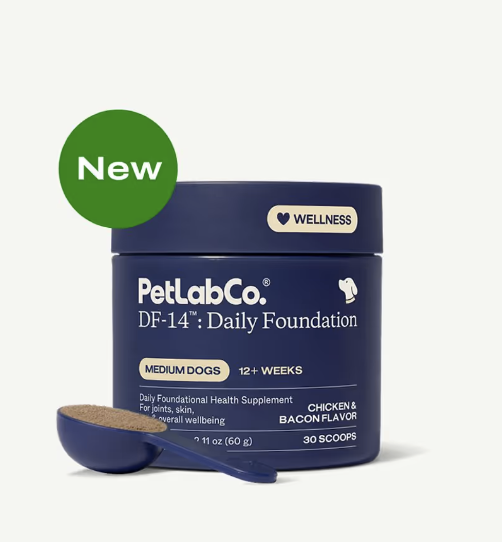
New DF-14™: Daily Foundation multifunctional health powder for dogs


Recommended Reading


 C
CWritten by
Charly Chow
Charly Chow is a pet-industry writer with a passion for canine mental health and wellbeing. When she’s not collaborating with PetLab Co's expert vets on helpful articles for pup pawrents, Charly can be found reading, exploring antiques shops, or cuddling up with Timo and Oreo, her Maltese and Maltipoo fur babies.Stay up to date
Get notified when I publish something new, and unsubscribe at any time.