A clinical study found that PetLabCo. dog Probiotic Chews significantly enhances a balanced inflammatory response in the gut.

- Home/
- Dog/
- Health & Wellness/
- Does PetLabCo.’s Probiotic Chew Work? What The Clinical Evidence Shows
Does PetLabCo.’s Probiotic Chew Work? What The Clinical Evidence Shows
Published by
Jan 19, 2026
Updated Jan 21, 2026
7 min read·Updated: Jan 21, 2026
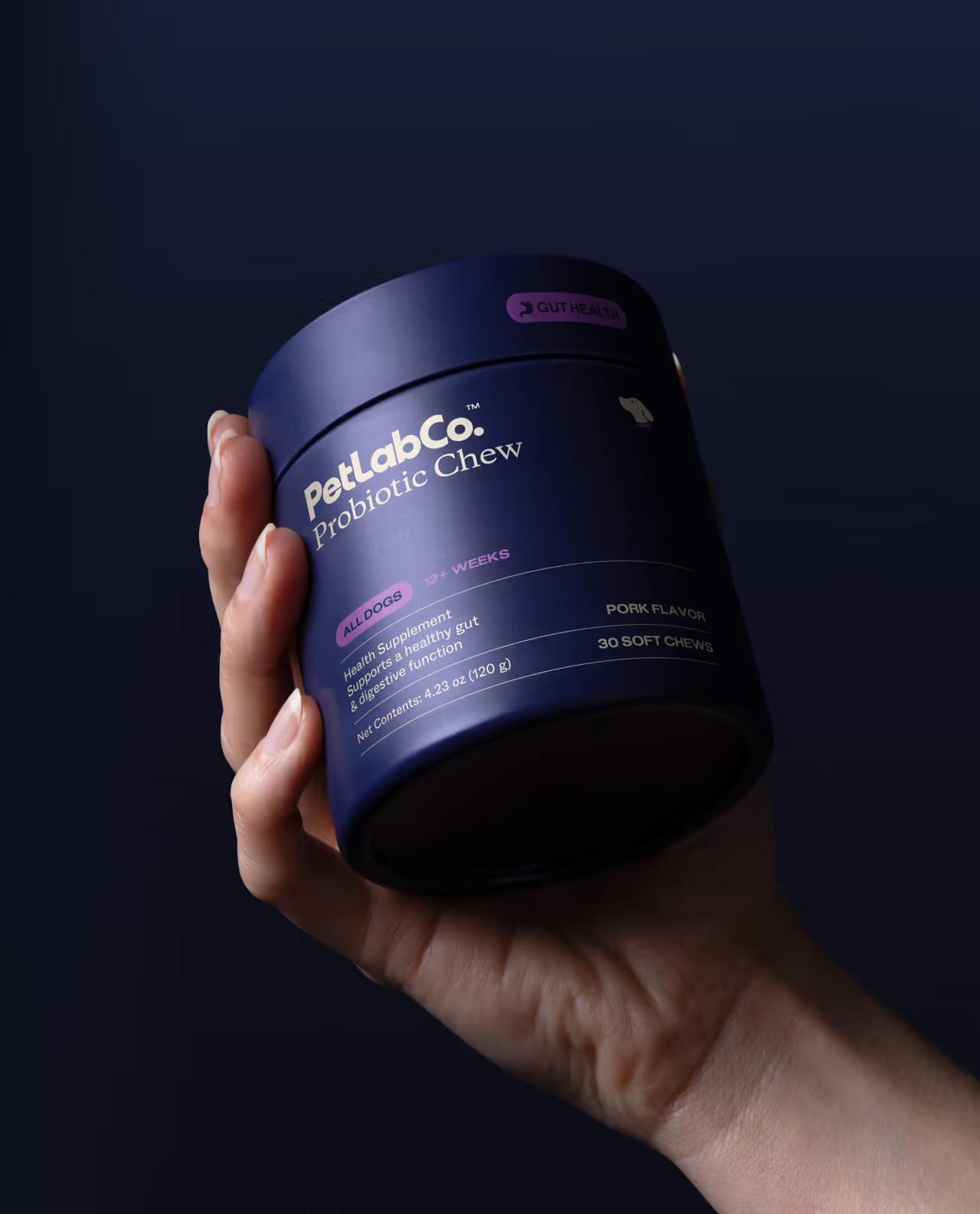
A clinical study found that PetLabCo. dog Probiotic Chews significantly enhances a balanced inflammatory response in the gut.
In a veterinary-led, placebo-controlled clinical study, 24 healthy adult dogs were given either PetLabCo.’s Probiotic Chew or a placebo soft chew once daily for 31 days.
Dogs who took Probiotic Chew showed measurable changes linked to gut health, including lower levels of a stool marker commonly used to assess gut inflammatory responses, an increase in gut microbiome alpha diversity (within the test group) of around 10%, and elevated relative abundance (prevalence compared with other species tested) of the beneficial Bacillus probiotic strains included in Probiotic Chew – suggesting these strains were able to pass through digestion and reach the gut.
Together, these findings suggest that when Probiotic Chew is given consistently, it may help support a healthier, more balanced gut environment as part of your dog’s everyday wellness routine (Zilinger et al., 2026).

Probiotic Chew Clinical Study Summary
- PetLabCo. funded a randomized, placebo-controlled clinical study to understand what happens when healthy adult dogs take Probiotic Chew consistently for 31 days.
- Twenty-four healthy adult Beagles were randomly assigned to receive either a placebo soft chew or PetLabCo.’s Probiotic Chew once daily for 31 days, alongside the same complete and balanced diet.
- Dogs receiving Probiotic Chew showed measurable shifts in their gut microbiome compared with the control group, indicating measurable changes in microbiome composition and diversity over time.
- Stool biomarkers associated with intestinal inflammatory responses were lower, including a reduction in fecal calprotectin, a commonly used gut inflammatory marker.
- All 3 Bacillus species included in Probiotic Chew increased in relative abundance, consistent with the strains surviving digestion and reaching the gut The soft chew was well tolerated, with no serious adverse events reported in either group during the study.
In Detail: Probiotic Chew Clinical Study Findings
At PetLabCo., we believe that when it comes to your dog’s health, confidence comes from evidence. Pet parents should be able to trust that the supplements they give their dogs are backed by real science, not just good intentions.
That’s why we supported a randomized, placebo-controlled clinical study to better understand what happens when healthy adult dogs take PetLabCo. Probiotic Chew consistently as part of their daily routine. Our aim was to look beyond assumptions and measure real, observable changes in gut health and the gut microbiome over time.
The results speak for themselves! After 31 days of daily use, dogs receiving Probiotic Chew showed measurable differences in key gut health markers compared with dogs given a placebo soft chew. These findings suggest that consistent use of Probiotic Chew may help support a more balanced and resilient gut environment.

What Changes Did Researchers Observe?
The clinical study found that our dog Probiotic Chews significantly enhances a balanced inflammatory response in the gut. Compared with the control group, healthy adult dogs given Probiotic Chew daily for 31 days showed several measurable shifts linked to gut health and microbiome balance, including:
- Lower fecal calprotectin levels, a stool biomarker commonly used by researchers to assess intestinal inflammatory response activity.
- An increase in microbiome diversity over time (Shannon index), often discussed as a sign of a more stable and resilient gut ecosystem.
- An increase in beneficial gut bacteria such as the % of total bacteria of Blautia, as well as an increase in the percent change from Day 0 of C. hiranosis.
Together, these observations suggest that Probiotic Chew may help support gut health markers when given consistently as part of a daily routine.
What Did We Do?
The Probiotic Chew clinical study was designed to evaluate whether PetLabCo.’s unique blend of Bacillus subtilis, Bacillus clausii, Bacillus coagulans, FOS and GOS prebiotics, and a postbiotic yeast extract could support gut and immune-related markers in healthy adult dogs when used consistently.
To do this, researchers recruited 24 healthy adult Beagle dogs, who were randomly assigned to one of two groups:
- Probiotic Chew group: received PetLabCo.’s Probiotic Chew daily.
- Control group: received a placebo soft chew with the active ingredients removed.
Throughout the study, all dogs:
- Had constant access to fresh drinking water.
- Were fed the same complete and balanced diet.
- Were monitored closely for wellbeing and tolerance.
Fecal and blood samples were collected at the start of the study (Day 0), midway (Day 14), and at the end of the 31-day period to track changes over time.
What Did We Find?
Dogs given Probiotic Chew showed signs of positive shifts in gut-related markers compared with dogs receiving the placebo.
By the end of the study, dogs in the Probiotic Chew group showed:
- Reduced fecal calprotectin levels
- Increased microbiome diversity over time
These changes were observed in clinically healthy dogs, suggesting that Probiotic Chew may help support gut balance even before obvious digestive issues arise.
What Do The Results Mean for Pet Parents?
The findings suggest that when Probiotic Chew is given consistently according to directions for at least 31 consecutive days, dogs may show signs of improved gut health markers and microbiome resilience.
This Probiotic Chew study provides encouraging evidence that it can be a supportive addition to a dog’s daily wellness routine.
Study Highlights


Anything to Be Aware Of?
Probiotic Chew was generally well tolerated throughout the study. Mild, short-term digestive upset (such as soft stools or brief stomach upset) occurred occasionally in both groups and resolved quickly.
No serious adverse events were reported in either group.
What Were The Study Limitations?
The dogs enrolled in this study were all clinically healthy. This means the results reflect changes observed in dogs without digestive or immune concerns. Dogs with existing health concerns may respond differently.
The study also lasted 31 days. While measurable changes were observed within this timeframe, greater or more noticeable benefits may be seen with longer-term, consistent use, as many gut-focused supplements are typically used for up to 90 days or more.
Final Thoughts: Does Probiotic Chew Work? What the Clinical Evidence Shows
Based on this clinical study, PetLabCo.’s Probiotic Chew contains probiotic strains that are resilient enough to survive digestion and reach the gut. The combination of probiotics, prebiotics, and postbiotic yeast extract was associated with measurable changes in gut health markers and microbiome composition in healthy adult dogs.
When used consistently, Probiotic Chew may help support digestive balance and overall gut wellbeing as part of a daily routine.

Ready to support your dog’s gut health with science-backed care?
Subscribe to Probiotic Chew today and save up to 40% on RRP.
Sources
Spore-forming probiotic bacteria: Characteristics, health benefits, and technological applications. Trends in Food Science & Technology, 138, 453–469. Soares, M. B., Almada, C. N., Pereira, E. P. R., Ferreira, B. M., Balthazar, C. F., Rocha, R. S., & Ranadheera, C. S. (2023).
The gut microbiome of dogs and cats, and the influence of diet. Veterinary Clinics of North America: Small Animal Practice, 51(3), 605–621. Pilla, R., & Suchodolski, J. S. (2021).
Verification of an immunoturbidimetric assay for measurement of fecal calprotectin in dogs. Journal of Veterinary Diagnostic Investigation, 34(5), 813–824. Enderle, L. L., Köller, G., & Heilmann, R. M. (2022).
 C
CWritten by
Charly Chow
Charly Chow is a pet-industry writer with a passion for canine mental health and wellbeing. When she’s not collaborating with PetLab Co's expert vets on helpful articles for pup pawrents, Charly can be found reading, exploring antiques shops, or cuddling up with Timo and Oreo, her Maltese and Maltipoo fur babies.Stay up to date
Get notified when I publish something new, and unsubscribe at any time.