This vet-reviewed guide helps you compare seasonal allergy soft chews for dogs: learn what the label should tell you, which ingredients show up most often, what the research can and cannot say, how to choose a format your dog will actually take, and when it is time to call your vet.

Choosing Seasonal Allergy Chews for Dogs: What To Look For
Published by
Nov 27, 2026
Updated Nov 27, 2026
27 min read·Updated: Nov 27, 2026
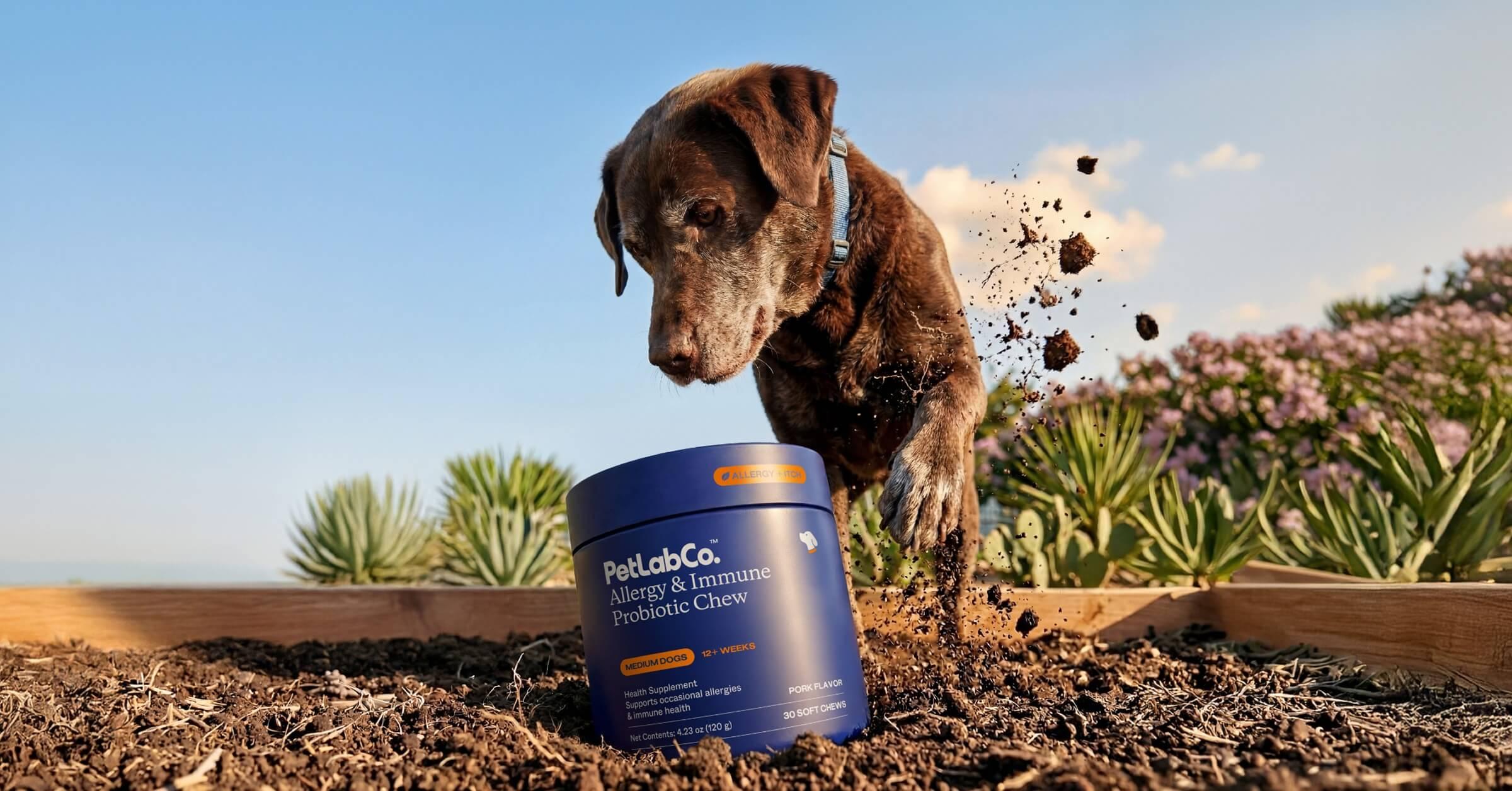
Medically reviewed by: Dr Legend Thurman DVM, MSL, CVBP, MRCVS, PetLabCo.® consultant | Last reviewed: 23/11/26
When choosing between seasonal allergy soft chews for your dog, I recommend selecting a vet-reviewed supplement formulated by experts in canine wellbeing. Your chosen soft chew should have a clear ingredient list, be acceptable within your dog’s dietary requirement guidelines, and come with directions matched to your dog’s weight. It’s important to factor in considerations such as current health concerns, flavor preferences or known reactions – speak to your vet if you are uncertain which seasonal allergy soft chew would be best for your dog.
Canine seasonal allergy soft chews are daily dog supplements that support a regular immune response in those prone to occasional sensitivities. They are best given to provide support for seasonal or environmental allergies, and do not replace veterinary care.
Key takeaways: choosing seasonal allergy chews for dogs
- There is no single best seasonal allergy supplement for dogs – when choosing between options you should factor in dietary requirements, current health concerns, and any preferences in flavor or format that might affect palatability.
- Judge each seasonal allergy soft chew by its label, ingredient amounts, directions by weight and the company’s quality controls, not by its marketing.
- Once you’ve chosen your dog’s seasonal allergy supplement, give it every day as directed. Some supplements need several weeks of consistent use before you can judge them, and PetLabCo.® says some can take up to 90 days, but do not wait it out if your dog’s itching is ongoing or getting worse. Speak to your vet sooner.
- Dog seasonal allergy soft chews support skin comfort and a balanced immune response. They are not medicine, and they cannot tell you why your dog is itchy, shaking their head, or licking their paws.
- One popular option is Allergy & Immune Probiotic Chews, a seasonal allergy supplement for dogs from PetLabCo.® Each tailored soft chew contains a proprietary probiotic blend, colostrum, prebiotics and postbiotics, together with total omega fatty acids 3,6 & 9 to support dogs with seasonal or occasional allergies, including occasional itching and paw licking.
- Every dog is different, and results may vary, so think of your dog’s seasonal allergy soft chew as one part of their vet-led plan, and seek veterinary advice if they experience ongoing signs
When choosing a seasonal allergy supplement for your dog, I encourage pet owners to look beyond marketing claims and focus on ingredient transparency, quality standards, and their individual dog’s needs. Supplements may play a supportive role in maintaining skin and immune health, but they should never replace identifying and addressing the underlying cause of itching. The best approach is always one that combines informed product choices with guidance from your veterinarian.
Dr Legend Thurman DVM, MSL, CVBP, MRCVS, PetLabCo.® consultant
How do I choose the best seasonal allergy soft chew for my dog?
As mentioned before, there is no single “best” seasonal allergy soft chew for dogs, but there are a number of factors that may make a particular soft chew one of the best potential options for your dog. Look for a full ingredient list with amounts per soft chew, directions by your dog’s weight, an expiry date, and a recognizable quality mark or audit program. Be wary of vague “proprietary blends” with no amounts and of any product that promises to fix seasonal or occasional dog allergies outright.
A good label is the quickest filter you have. Here is a practical checklist you can run in about two minutes, in the shop or on a product page.
A seasonal allergy soft chew label checklist for dog owners:
- Active ingredients with amounts. The Supplement Facts panel should list each active ingredient and how much is in one soft chew. A “proprietary blend” is not automatically a problem, since many reputable formulas use one, but the rest of the panel should still be specific, and the company should be willing to explain it.
- Directions by weight. Dogs range from a few pounds to well over a hundred. A single soft chew size for every dog means the amount is a guess for most of them. Soft chews that come in small, medium and large versions, or that give a count by weight band, are doing the math for you.
- Inactive ingredients. This is where flavorings, proteins and fillers hide. If your dog has a known sensitivity to chicken, pork, dairy or fish, read this list as carefully as the active one.
- Cautions. A responsible label states who should not use the product, or who should ask a vet first, for example pregnant or breeding animals.
- Age guidance. Some soft chews are suitable from 12 weeks of age; others are adult-only.
- Expiry date. This tells you whether a product is within the recommended date of use.
- A quality program. More on this below.
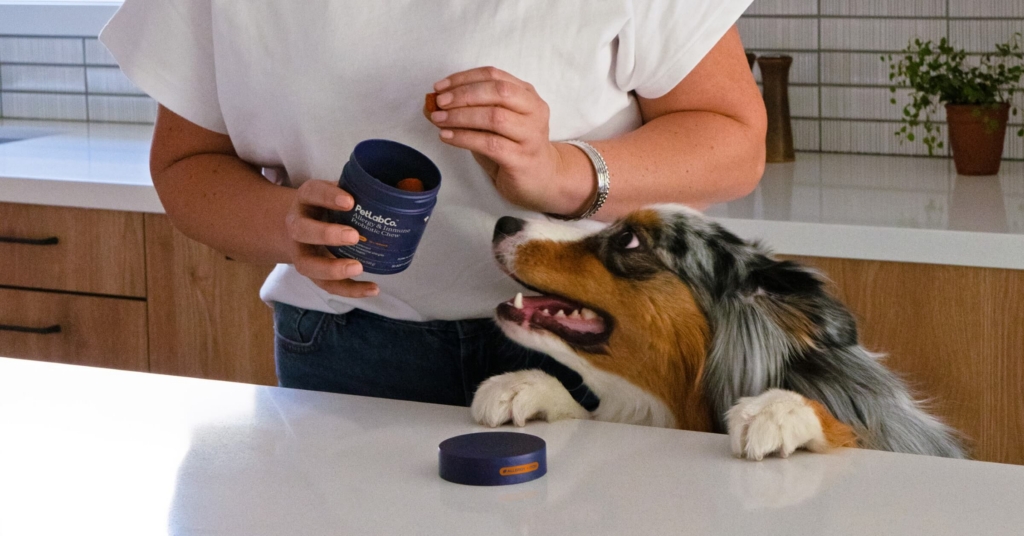
How does the PetLabCo.® Allergy & Immune Chew label measure up?
- Its Supplement Facts panel lists each active ingredient with an amount per soft chew, including the probiotic blend (in CFU), bovine colostrum, FOS, GOS, a postbiotic yeast blend, omega fatty acids, EPA, DHA, GLA and vitamin E.
- The probiotic strains sit inside a proprietary blend, but the CFU count is still stated.
- Directions are built around weight: the product comes in small, medium and large tub sizes for dogs under 25 lbs, 25 to 75 lbs and over 75 lbs, with one soft chew a day for each, so owners don’t have to work out the amount themselves.
- The full inactive ingredient list is published, and it includes pork liver, so owners of dogs with a pork sensitivity can check it before buying.
- The product carries an expiry date for clear guidance on when to finish use by.
- The label also carries the cautions a responsible product should. It says to stop use and talk to your veterinarian if your dog’s condition worsens or doesn’t improve, that safe use in pregnant or breeding animals hasn’t been proven, that a vet exam is recommended before use, and that absorption of other drugs taken at the same time may be delayed.
- It is suitable for dogs 12 weeks and older.
- PetLabCo.® is also a member of the National Animal Supplement Council (NASC), a quality program which gives owners an outside standard to check the company against.
- Finally, the product is described as supporting gut and immune health and skin comfort, not as a fix for allergies or a replacement for veterinary care.
Red flags worth walking away from
I’d recommend walking away from any seasonal dog allergy soft chews in the pet aisle that:
- Do not provide amounts of any ingredient on the label.
- Carry claims that sound like medical treatment of a diagnosed condition.
- Have a formula which includes ingredients your vet has told you to avoid for your dog.
- Are a single “one size” soft chew for dogs of every weight.
- Have a label with no contact information and no way to ask a question.
None of these red flags are about which brand is fashionable. They are about whether you can tell, from the packaging alone, what your dog is getting.
What do seasonal allergy soft chews do for dogs?
Seasonal allergy soft chews are daily supplements formulated to support skin comfort and a balanced immune response during occasional sensitivities. They are not medicine and they do not address the cause of itching. If your dog scratches, licks paws or shakes their head often, a vet should check first before you make any changes to their daily routine. Itching can have many causes, so a supplement is best thought of as one supportive part of a wider plan, rather than the main answer to persistent itching.
It helps to understand what is going on underneath. Dogs can develop occasional allergies when their immune systems react to environmental triggers that are normally harmless. Some of these triggers are seasonal, although some dogs react year-round. Seasonal or environmental allergies tend to show up on the skin first, which is why itching, paw licking and face rubbing are the signs owners often notice.
If your dog is showing signs of discomfort, it’s important to speak to your vet and determine the cause before selecting a seasonal allergy supplement – they may require veterinary support for a specific concern that can not be helped through supplementation alone.
So what can a dog seasonal allergy supplement reasonably do? The aim of a well-designed seasonal dog allergy soft chew is more modest. It tries to support the things that sit around the problem: the condition of the skin, the balance of the gut, and the way the immune system responds to everyday triggers. A soft chew may be one supportive habit in a routine that your vet is guiding, alongside find out what is causing your dog’s discomfort. It is not a stand-in for an exam, a diet trial or further veterinary care.

What are the signs of seasonal sensitivity in dogs?
One of the most common misconceptions I encounter is that seasonal allergies in dogs always show up as obvious scratching. In reality, we frequently see ear discomfort, paw licking, face rubbing, scooting and changes in skin condition. I encourage owners to keep track of when signs develop, where their dog seems uncomfortable, and whether those signs come back throughout the year. That information can be incredibly valuable when developing an individualized plan.
Dr Legend Thurman DVM, MSL, CVBP, MRCVS, PetLabCo.® consultant
Seasonal allergies often follow a recognizable pattern, but similar signs can have other causes, such as food sensitivities, or other skin and ear concerns. If you are concerned about any of the signs you’re seeing, it’s important to contact your vet.
When should you ask your vet about seasonal allergy soft chews for dogs?
Make sure to speak with your vet before giving your dog a seasonal allergy supplement if their itching is constant, keeps coming back, or you see skin changes.
It’s always a good idea to consult your vet about which seasonal allergy supplement is best for your dog, ideally before making any changes to their daily supplement stack.
Call your vet promptly if you notice:
- Itching that does not ease promptly
- Changes to your dog’s skin, paws, eyes or ears
- Changes to your dog’s regular behavior, eating or toilet habits
- If your dog is on medication, is pregnant or nursing, or has an existing health condition
Your vet can perform a wellness check and talk through options for long-term management. A supplement can sit alongside that plan if your vet agrees.
Which ingredients are common in seasonal allergy soft chews for dogs?
Common ingredients include omega-3 and omega-6 fatty acids for skin, vitamin E, probiotics and prebiotics for gut balance, and colostrum for immune support.
Here’s more information about each of these common ingredients, what they are generally used for, and how they may be beneficial for dogs with seasonal allergies, so you can read a label with helpful context.
Omega-3 fatty acids (fish, krill and similar oils)
Omega-3s are among the best-known skin-and-coat ingredients in dog supplements. The two you’ll see most often are EPA and DHA, which come from marine sources such as fish and krill oil, and these are the omega-3s most often studied for their role in supporting healthy skin and a normal inflammatory response. Some soft chews pair these with plant-based sources such as borage oil, which provides GLA, an omega-6 fatty acid that has also been studied for skin support. The different omega families are not interchangeable. If you see an ingredient list like “total omega fatty acids (3, 6 and 9)”, it simply means more than one family of fats is present. It does not tell you how much EPA, DHA or GLA a soft chew provides, or whether the amounts are similar to those used in research, so look for the individual amounts on the label.
Vitamin E
Vitamin E is a common companion to oils and is generally described as an antioxidant that supports skin health.
Probiotics, prebiotics and postbiotics
These are the gut-focused ingredients in a dog seasonal allergy soft chew, and they’re there because of the link between gut balance and the immune system. The idea is that a healthy gut supports a balanced immune response, which may in turn help support dogs during seasonal sensitivities. That’s how the PetLabCo.® Allergy & Immune Chew product page frames it. Each part plays a different role. Probiotics are the beneficial bacteria, and they support digestive health, gut balance and immune health. Prebiotics such as FOS and GOS are fibers that feed those bacteria and support digestive health and normal immune function. Postbiotics, such as a yeast-based blend, support gut balance and immune function too. Together they aim at the gut, with skin comfort as a benefit owners are hoping to see downstream. The link between the gut and the skin is an interesting and developing area of research in dogs, but results vary with the strains, formula and amounts used, and a change in gut bacteria does not necessarily mean less seasonal or environmental itching. A label can reasonably claim support for digestive function and a balanced immune response, not relief from seasonal allergies. When you compare allergy soft chews for dogs, look for a live-organism count (CFU) per soft chew, any strains the company names, and directions by dog weight.
Colostrum
Colostrum is a protein-rich fluid produced by the mammary glands. In supplements for dogs it is usually bovine, meaning it comes from cows, and it is included to support gut and immune function. As with probiotics, the research behind specific benefits in dogs is limited, so view it as a supporting ingredient. If your dog is sensitive to dairy, ask your vet before choosing a soft chew that contains it.
What the research can and cannot tell you
Most supplement ingredients have not been tested in large, well-controlled trials in dogs with seasonal sensitivities. A good rule of thumb is to give more weight to products that are transparent about what they contain and why. Whatever you choose, your vet remains the best judge of whether a given ingredient suits your dog’s history, diet and needs.
What does an NASC Quality Seal tell you?
The NASC Quality Seal tells you a supplement company has passed an independent quality audit and keeps meeting the National Animal Supplement Council’s requirements. It is not a government approval and it does not mean a product suits every dog, but it is a useful marker that a company has quality systems in place.
The National Animal Supplement Council (NASC) is a nonprofit trade association for the companion animal and equine supplement industry. According to NASC, companies must pass an independent quality audit and maintain ongoing compliance to earn permission to display the yellow Quality Seal, and the seal cannot be purchased. The criteria NASC lists include:
- A quality control manual with written standard operating procedures for production
- An adverse event reporting and complaint system
- Compliance with strict labeling guidelines
- Caution statements on labels for particular ingredients as recommended by the FDA’s Center for Veterinary Medicine
- Random product testing by an independent lab to confirm products meet their label claim
- Annual training facilitated by NASC
What the seal does not do is just as worth knowing. It does not rate how well a formula works for a specific condition, and it does not replace your vet’s judgment. Think of it as evidence of how a product is made and monitored, not proof of what it will do for your dog. NASC publishes a list of audited member companies, so if a brand mentions the seal, you can check that list yourself.
The same logic applies to other signals you may see on a product page: “third-party tested”, “made in the USA”, “vet reviewed”. Each is a piece of information, not a guarantee. The most reassuring combination is a transparent label, a documented quality program, and a company that is willing to answer questions.
How do you choose between soft chews, powders and other dog allergy supplement formats?
Choose the format your dog will take every day. Soft chews suit dogs that accept tasty extras that are given by hand. Powders suit picky eaters because they mix into food. Consistency matters more than format.
The format question sounds trivial, but a supplement that your dog refuses cannot provide consistent support. A short comparison:
| Format | Works well when | Watch out for |
| Soft chew | Your dog takes food from the hand readily; you want fast, mess-free daily use | Flavor proteins (for example pork or chicken) in dogs with known sensitivities; soft chews that are too hard for small or older dogs |
| Powder | Your dog is a picky eater or has dental problems; you want flexible mixing into meals | Dogs that leave powdered food behind; measuring errors |
| Liquid | Your dog accepts drizzled toppers | Mess, storage after opening |
Two more practical tips. First, introduce any new dog seasonal allergy supplement on its own, and give it a few days before adding anything else, so that if your dog has an upset stomach you know the cause. Second, stick to the weight-based directions on the label and never combine overlapping products on a hunch. If you already give a fish oil, a probiotic or a multivitamin, tell your vet and show them the labels so they can check for overlap.
Do seasonal allergy soft chews work for dogs, and how long should you try one for?
Many dogs take seasonal allergy soft chews as part of a routine that supports skin comfort, but results vary and soft chews do not replace veterinary care. Some supplements need several weeks of consistent use before you can judge them, but if itching continues or gets worse, stop and speak to your vet sooner rather than waiting.
A realistic way to judge a dog seasonal allergy soft chew:
- Write down a baseline. Before starting, note how often your dog scratches, licks paws or shakes their head, where, and at what times of day. A simple 1-to-5 daily score is enough.
- Change one thing at a time. If you start a soft chew the same week you change food or other aspects of their daily routine, you will not know what made a difference.
- Give it time. Some supplements need several weeks of consistent daily use before you can fairly judge them, and the PetLabCo.® product page describes a timeline of up to 90 days. That is not a reason to wait if your dog is uncomfortable: ongoing or worsening itching, ear discomfort or skin changes need a vet check sooner.
- Review honestly. Compare your notes after the trial period. If the pattern has not changed, that is useful information for your vet, not a failure on your part.
- Look at the whole picture. Skin comfort is influenced by diet, bathing, the home environment and the seasons. A soft chew is one small aspect of overall seasonal allergy support.
If you see worsening signs, stop the supplement and call your vet. Signs of heightened allergic response in dogs can shift over time or with exposure to new triggers. Your dog’s plan may need adjusting when new signs appear.

Supporting a dog through seasonal allergies is rarely about finding one product that solves everything. It’s about understanding the individual dog, supporting healthy skin, getting veterinary help when it’s needed, and consistently reassessing their comfort. Supplements may complement a broader plan, but persistent itching should never be considered something a dog simply has to tolerate while waiting for a supplement to work.
Dr Legend Thurman DVM, MSL, CVBP, MRCVS, PetLabCo.® consultant
How does PetLabCo.® Allergy & Immune Chew fit?
PetLabCo.® Allergy & Immune Chew is a daily soft chew formulated to support seasonal sensitivities and skin comfort, with a proprietary blend of probiotics, prebiotics and a postbiotic yeast blend. It comes in small, medium and large sizes matched to your dog’s weight. It is pork flavored, and a vet exam is recommended before use.
The Allergy & Immune Chew is described as a soft chew with a proprietary blend of probiotics, prebiotics, omega fatty acids and colostrum, designed to support gut and immune health and to help with occasional skin sensitivities, scratching and paw licking.
What is on the Supplement Facts panel. The active ingredients listed per soft chew are a proprietary blend of probiotics, bovine colostrum, fructooligosaccharide (FOS), galactooligosaccharides (GOS), a synergistic postbiotic yeast blend, total omega fatty acids (3, 6 and 9) from krill and borage oil, and vitamin E (as dl-alpha-tocopheryl acetate). The inactive ingredients are apple cider vinegar, chickpea, coconut glycerin, coconut oil, hickory smoke flavor, lecithin, maltodextrin, pork liver, rosemary extract, sunflower oil and sweet potato.
How the page describes its job. The product page says the probiotic blend of spore-forming probiotics supports digestive function, gut balance and immune health, and that the colostrum supports a healthy immune response and gut, skin and tissue health. It says the omega fatty acids support healthy, hydrated skin and a normal inflammatory response, and that vitamin E supports skin health and normal immune function. It also says that a healthy gut supports a balanced immune response, which may help with seasonal sensitivities like head shaking and paw chewing.
Sizing and directions. One soft chew a day, in a size to match your dog: small for dogs under 25 lbs, medium for 25 to 75 lbs and large for dogs over 75 lbs. The page says the soft chews are suitable for dogs 12 weeks and older.
What to expect. The page describes a gradual timeline across about three months, with gut support beginning in month one and, in months two and three, some owners noticing calmer skin and more comfort during allergy season. As with any supplement, results vary from dog to dog, there is no single timeline, and ongoing or worsening signs need a vet check rather than a longer wait.
Cautions from the label. The page recommends an examination from a veterinarian before using the product, and says that safe use in pregnant animals or animals intended for breeding has not been proven. If your dog’s condition worsens or does not improve, the label says to stop and consult your vet. It also notes that absorption of drugs taken at the same time may be delayed, so mention it to your vet if your dog takes medication. If your dog has a known sensitivity to pork, dairy or marine ingredients such as krill, check the ingredient list with your vet first.
Where does this fit in the checklist above? The label provides amounts per soft chew in three sizes, weight-based directions, a stated age guideline and written cautions. If you would like to compare with other options, the Allergy & Itch collection lists the range in one place. For a practical walk-through of giving the soft chew, PetLabCo.® also has a how-to-use guide for the Allergy & Immune Chew.
As always, the right first step is a conversation with your vet, and a soft chew is something to add to a plan, not to replace one.
How do you give seasonal allergy soft chews to a dog?

Give the soft chew exactly as directed for your dog’s weight, with a consistent routine. Introduce it on its own, watch for any digestive upset, and keep it away from other animals and children. Tell your vet about every supplement and medication your dog takes.
A few small habits make a big difference.
- Weigh your dog. Weight bands only work if you know the right number. Reweigh every few months, especially for puppies, seniors or dogs that are changing size.
- Stick to a routine. Depending on usage guidance, giving your dog’s seasonal allergy supplement before or after mealtime or an evening walk may help you stay consistent.
- Store it properly. Keep the tub sealed, cool and out of direct sunlight, as labels typically advise, and keep supplements out of reach of children and pets, since a soft chew can be tempting.
- Know what to do after an accident. If a dog eats far more than the label directs, contact your vet right away.
- Do not double up. If another product also contains probiotics, omega-3s or similar ingredients, ask your vet to check for overlap before you give both.
- Keep your vet in the loop. Share the product label at your next visit. Vets can only guide you well if they see what your dog is actually eating.
Finally, remember that the season matters. Many owners find that their dog’s sensitivities cluster in particular months. If you know when your dog’s pattern usually starts, it is reasonable to talk to your vet about timing a supplement routine and any other support before that period begins, rather than waiting until your dog is already uncomfortable.
What should you remember when comparing dog seasonal allergy soft chews?
Compare soft chews on transparency, not on adjectives. A clear panel with amounts, weight-based directions, honest cautions, a documented quality program and a vet in your corner will tell you far more than a bold claim on the front of the tub.
If you only take a few things from this guide:
- Start with your vet, especially if itching is persistent, to help determine the cause.
- Read the Supplement Facts panel and the inactive ingredients with your own dog’s sensitivities in mind.
- Look for a documented quality program and be wary of claims that promise a fix.
- Pick a format your dog will take daily, and give it enough of a fair trial, but see your vet sooner if itching continues or gets worse.
- Track a simple baseline so you and your vet can see what is changing.
Choosing well takes ten minutes of label reading and one good conversation at your next vet visit. Your dog will thank you for it, probably between scratches.
Frequently asked questions: choosing between seasonal allergy soft chews for dogs
Do seasonal allergy soft chews work for dogs?
Many dogs take them as part of a routine that supports skin comfort, but results vary and they do not replace veterinary care. A soft chew works best as one supportive part of a wider plan. Give it consistently as directed, keep notes on scratching and paw licking, and ask your vet if the itching continues or gets worse.
What is the difference between a seasonal allergy soft chew and a probiotic soft chew?
A seasonal allergy soft chew is formulated around seasonal sensitivities and skin comfort, and often adds ingredients such as omega fatty acids, vitamin E or colostrum to a probiotic base. A probiotic soft chew focuses mainly on gut balance. Check each label for its actual ingredients and ask your vet which suits your dog.
Can I give my dog an seasonal allergy soft chew alongside other supplements?
Often that is fine, but check the labels for overlapping ingredients such as probiotics or omega-3s, and tell your vet about everything your dog takes. Introduce one new product at a time so you can spot any digestive upset. Check before pairing products.
How long until I see a difference?
Some supplements need several weeks of consistent use before you can judge them. The PetLabCo.® Allergy & Immune Chew page describes a timeline across about 90 days of daily use, and says results vary. There is no single timeline for every dog, and you should not wait it out if your dog’s itching is ongoing or getting worse: speak to your vet.
Can puppies take seasonal allergy soft chews?
It depends on the product. The PetLabCo.® Allergy & Immune Chew page states it is suitable for dogs 12 weeks and older, and recommends contacting your vet with questions about puppies. Always check the age guidance on any label and talk to your vet before starting a supplement in a young dog.
Can I use human allergy medicine instead?
Do not give human medicine without asking your vet. Some human products contain ingredients that are not suitable for pets. Your vet can tell you what is appropriate for your dog.
What does the NASC Quality Seal mean?
It means a supplement company has passed an independent quality audit and keeps meeting the National Animal Supplement Council’s requirements, including quality control procedures, adverse event reporting, labeling rules and random lab testing. It is not a government approval, and it does not mean a product suits every dog.
When should I see my vet about my dog’s itching?
See your vet if itching seems to be increasing, your dog’s ears, paws or skin are affected, or you see changes to their behavior, eating habits or stool consistency. Supplements are for support alongside veterinary care.
Sources
- National Animal Supplement Council, “NASC Quality Seal”: https://www.nasc.cc/nasc-seal/
- National Animal Supplement Council, home page: https://www.nasc.cc/
- PetLabCo.® Allergy & Immune Chews product page (live label wording and ingredient list): https://thepetlabco.com/products/tailored-probiotic-allergy-immune
The information in this article is for general education and is not a substitute for professional veterinary advice. These statements have not been evaluated by the Food and Drug Administration. This product is not intended to diagnose, treat, cure or prevent any disease.
Related articles
- To learn more about what triggers seasonal allergies in dogs and the signs to watch for, read our guide to seasonal dog allergies.
- To learn more about how probiotics fit into a seasonal allergy routine, read should I give my dog probiotics for seasonal allergies?
- To learn more about colostrum and how it supports your dog’s immune system, read our vet’s guide to colostrum for dogs.
- Not sure which soft chew suits your dog? To learn more about how the two compare, read PetLabCo.® Probiotic Chew vs. Tailored Allergy & Immune Chews.
- To learn more about serving sizes and when to start before allergy season, read how to use PetLabCo.® Tailored Allergy & Immune Chews.
 C
Written by
Charly Chow
Charly Chow is a pet-industry writer with a passion for canine mental health and wellbeing. When she’s not collaborating with PetLab Co's expert vets on helpful articles for pup pawrents, Charly can be found reading, exploring antiques shops, or cuddling up with Timo and Oreo, her Maltese and Maltipoo fur babies.Stay up to date
Get notified when I publish something new, and unsubscribe at any time.