Knowing the milestones of German Shepherd growth can help you keep track of your dog’s health. Learn what to expect at every stage.

- Home/
- Dog/
- Health & Wellness/
- German Shepherd Growth Chart: When Do German Shepherds Stop Growing?
German Shepherd Growth Chart: When Do German Shepherds Stop Growing?
Published by
Mar 21, 2025
Updated Feb 24, 2026
8 min read·Updated: Feb 24, 2026

Reviewed by
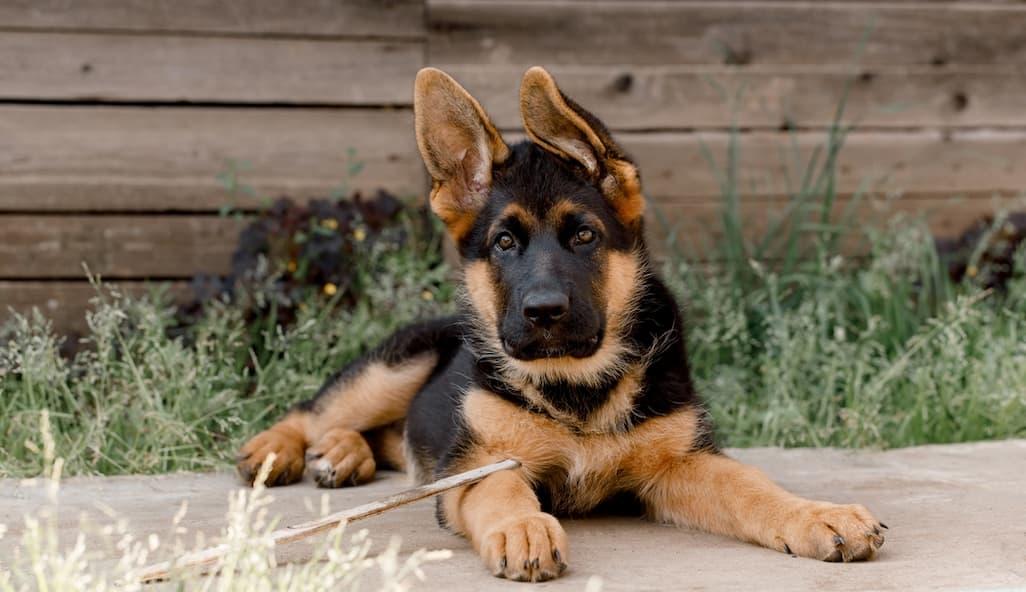
On average, German Shepherds stop growing by three years of age. Most German Shepherds reach their adult height by around 10-14 months (sometimes up to 18 months), while muscle mass and chest development can continue through 2-3 years. Males often take longer to fully mature than females. Using a German Shepherd growth chart can help you track your pup’s development and spot potential concerns early, but it’s important to remember that every dog matures at their own pace. The average time it takes for a German Shepherd to stop growing can vary significantly between working lines, show lines, and mixed bloodlines.
Key facts about German Shepherd growth:
- Most German Shepherds stop growing by 3 years of age.
- They typically reach their full height by 10-14 months (sometimes up to 18 months).
- They continue to gain muscle and fill out through 2-3 years.
- Male German Shepherds often take longer to fully mature than females.
- Average time taken to achieve full growth varies.
- Using a German Shepherd growth chart can help you track your puppy’s progress.
While your German Shepherd may look “fully grown” by their first birthday, their body is still developing beneath the surface.

German Shepherd Growth Stages
German Shepherds go through several distinct growth stages before reaching adulthood. Weights are averages and vary significantly between working lines, show lines, and mixed bloodlines.
| German Shepherd Growth Stage | Age | Characterization |
| Neonatal Stage | 0–2 Weeks | At birth, German Shepherd puppies weigh about 0.8–1.3 pounds and rely completely on their mother. |
| Transitional Stage | 2–4 Weeks | Eyes and ears begin to open, mobility increases, and weight gain becomes more noticeable. |
| Socialization Stage | 4–12 Weeks | Growth accelerates. By 8 weeks, puppies typically weigh 11–20 pounds. This is also a key period for learning and development. |
| Juvenile Stage | 3–6 Months | German Shepherds experience major growth spurts and may weigh 20–55 pounds. Adult teeth begin to emerge. |
| Adolescent Stage | 6–12 Months | Dogs may appear lanky as their bodies grow faster than their coordination. Weight often ranges from 50–85 pounds. |
| Adult Stage | 1–3 Years | German Shepherds reach their full height (22-26 inches) by around 12-18 months, but they may continue to develop muscle mass up until they reach age 2 or 3. Their final weight ranges from 50-90 pounds, with males being larger than females. |
German Shepherd Growth Chart by Age
The chart below shows average weight ranges for German Shepherds as they grow. Your veterinarian can help determine whether your German Shepherd’s growth is appropriate for their age and build.
Veterinary insight:

It is important to note that average German Shepherd growth figures are estimates, and it’s common for healthy dogs to fall outside of these ranges. If you are concerned at all about your German Shepherd’s growth, consult your veterinarian for advice.” – Dr. Thurman Legend, DVM MSL CVBP MRCVS, PetLabCo. Consultant
| German Shepherd Age | Male Weight (lbs) | Female Weight (lbs) |
| 1 Month | 5-9 | 4-8 |
| 2 Months | 16-20 | 11-17 |
| 3 Months | 22-30 | 17-26 |
| 4 Months | 35-40 | 31-35 |
| 5 Months | 40-49 | 35-44 |
| 6 Months | 49-57 | 44-49 |
| 7 Months | 57-62 | 49-53 |
| 8 Months | 62-66 | 53-57 |
| 9 Months | 66-71 | 57-60 |
| 10 Months | 71-75 | 60-64 |
| 11 Months | 75-79 | 64-66 |
| 1 Year | 75-85 | 66-70 |
| 2 Years | 85-90 | 70-75 |
German Shepherd Weight by Age: What’s Normal?

Weight varies widely between individual dogs. Genetics, sex, diet, activity level and bloodlines (working, show, or mixed) all play a role.
Rather than focusing on a single number, it’s more important to watch for:
- Steady, gradual growth
- A healthy body condition
- Good energy and mobility
Sudden weight gain or poor growth should be discussed with your veterinarian.
Factors That Affect German Shepherd Growth
Several factors influence how large a German Shepherd grows, and how quickly:
- Genetics: A puppy’s genetics plays a big role in determining their adult size. German Shepherds from working lines tend to be leaner, while those from show lines may have bulkier builds.
- Nutrition: Dr Legend DVM MSL CVBP MRCVS, Vet Consultant to PetLabCo., specifies that German Shepherd puppies should be fed large-breed puppy formulations with controlled calcium and phosphorus levels and an appropriate calcium-to-phosphorus ratio. Overfeeding or underfeeding may impact growth and overall wellbeing.
- Exercise and Activity Level: Regular, age-appropriate exercise supports healthy development. High-impact activity should be limited while joints are still developing.
- Spaying and Neutering: If you decide to spay or neuter your German Shepherd, timing should be discussed with your veterinarian and based on what’s best for your dog’s overall health and wellbeing.
- Joint Health: Dr Legend explains that high-impact exercise should be limited in young German Shepherds until their growth plates close (typically around 12-18 months). Joint conditions, such as hip or elbow dysplasia, may affect growth and mobility as a dog matures. It’s important to keep an eye out for early signs, such as bunny hopping, stiffness after rest, or reluctance to rise.
FAQ: When Do German Shepherds Stop Growing?
When Are German Shepherds Fully Grown?
German Shepherds are considered fully grown once they have reached:
- Their adult height
- Their final body weight
- Full muscle and skeletal maturity
For most dogs, this occurs between 2 and 3 years old, depending on genetics, sex, nutrition, bloodlines, and activity level.
How Long Do German Shepherds Grow?
German Shepherds grow for longer than many other breeds, which is typical for large dogs.
- The most rapid growth happens in the first 6–12 months
- Growth slows after the first year but continues gradually
- Muscle development and body composition may change into the third year
Growth does not stop suddenly; it tapers over time.
How Can I Support Healthy German Shepherd Growth?
This information is for general educational purposes and is not a substitute for veterinary advice. General guidance on how to support healthy growth in German Shepherd includes:
- Provide a balanced diet. Choose high-quality dog food that supports large breed development. Look for formulas rich in protein, healthy fats, and essential vitamins.
- Schedule regular veterinary checkups. Routine vet visits ensure that your German Shepherd is growing appropriately and can help you assess your dog’s diet and exercise needs. Proactive vet visits also help detect potential health issues early, before they become big problems.
- Offer plenty of exercise. Engage your pup in age-appropriate activities. Avoid excessive high-impact exercises, such as jumping or long runs, until their joints fully develop.
- Maintain a healthy weight. Obesity can lead to joint issues and other health concerns. Use portion control and monitor your German Shepherd’s weight to ensure steady growth.
- Don’t skip socialization and training. A well-balanced puppy not only grows physically but also mentally. Enroll your German Shepherd in training and socialization classes to build confidence and keep them mentally stimulated.
When Should I Worry About My German Shepherd’s Growth?
Consider speaking with your veterinarian if your dog:
- Is much smaller or larger than expected for their age
- Gains weight very rapidly
- Appears underweight, lethargic, or uncomfortable
- Shows signs of joint pain or difficulty moving
Early guidance can help support long-term health.
Final Thoughts: When Does a German Shepherd Stop Growing?
German Shepherds are slow-maturing dogs that take up to three years to fully develop. While height stabilizes earlier, strength and body composition continue to change well into adulthood.
Tracking growth over time and working with your veterinarian can help ensure your German Shepherd grows into a healthy, well-balanced adult.
Always consult with a veterinarian if you have concerns about your puppy’s growth and wellbeing.
Sources
- American Kennel Club (AKC). German Shepherd Dog breed information, size standards, and development.
https://www.akc.org/dog-breeds/german-shepherd-dog/ - VCA Animal Hospitals. Large-breed puppy growth and development guidance.
https://vcahospitals.com/know-your-pet/large-breed-puppy-growth-and-development - Cornell University College of Veterinary Medicine. Growth and skeletal development in large-breed dogs.
https://www.vet.cornell.edu/departments/riney-canine-health-center - PetMD. German Shepherd size, weight, and growth considerations.
https://www.petmd.com/dog/breeds/c_dg_german_shepherd_dog - The Kennel Club (UK). German Shepherd breed overview and physical development (used for general breed context).
https://www.thekennelclub.org.uk/search/breeds-a-to-z/breeds/pastoral/german-shepherd-dog/
Recommended Reading


 D
DWritten by
Deidre Grieves
Deidre Grieves is a pet-industry writer and editor with over 15 years of experience working for brands including petMD, Chewy, and Great Pet Care. She’s currently the Director of SEO at PetLab Co. When not creating content about pets, she enjoys spending family time with her husband, two human babies, and Goldendoodle named Clementine.Stay up to date
Get notified when I publish something new, and unsubscribe at any time.